
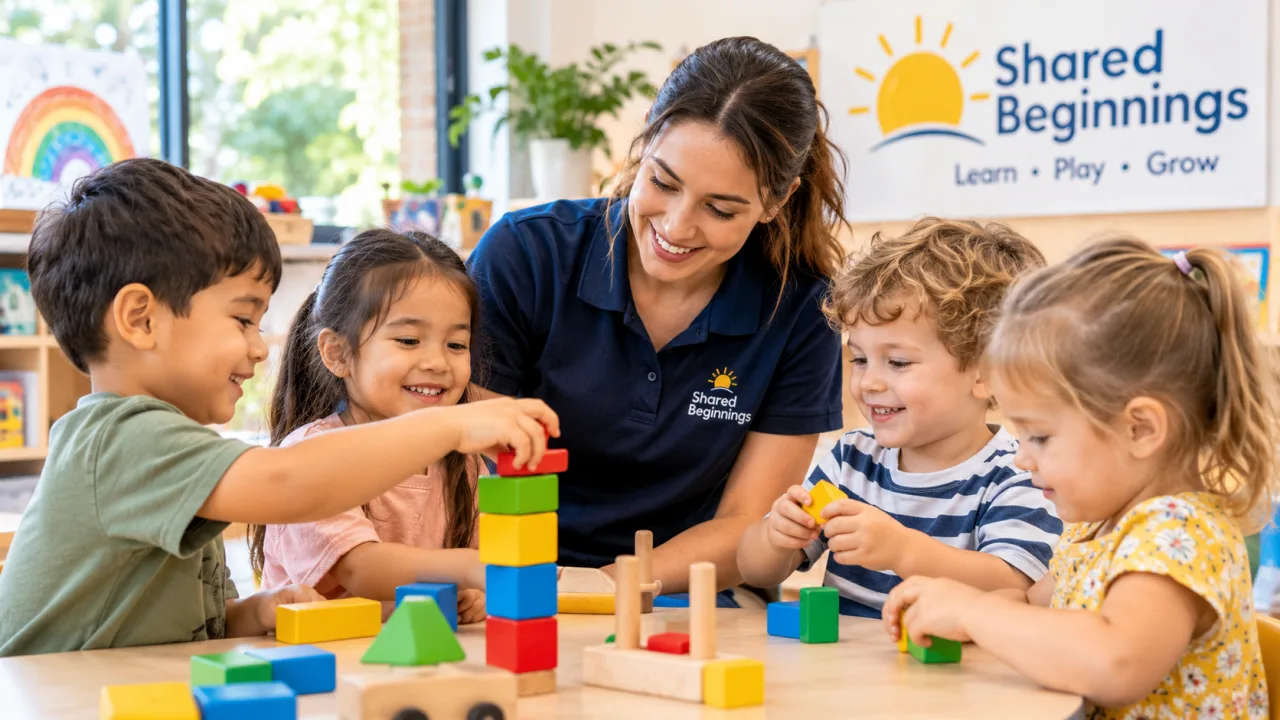
 A positive early learning experience begins with an environment where children feel safe, valued, and encouraged to explore. Quality childcare combines supportive relationships, engaging activities, and thoughtfully designed spaces to help children develop essential social, emotional, cognitive, and physical skills.
Shared Beginnings provides childcare and early learning services in Queensland, with its Kenmore Park preschool and kindergarten serving as an example of the role early childhood settings play in supporting children’s development.
What Makes a Childcare Environment Nurturing?
A nurturing childcare environment gives children the confidence to explore, ask questions, build relationships, and learn at their own pace. It balances emotional security with opportunities for discovery, helping children develop independence while knowing that trusted adults are available to support them.
Several elements contribute to a positive early learning experience:
-
Safety and security: Clean, well-maintained facilities and appropriate supervision help children feel protected.
-
Supportive relationships: Warm, responsive interactions with educators encourage trust and emotional security.
-
Meaningful learning experiences: Age-appropriate activities stimulate curiosity, creativity, and problem-solving.
-
Inclusive practices: Respect for different cultural backgrounds, abilities, and developmental needs helps every child feel welcome.
-
Family partnerships: Open communication between educators and families supports consistency between home and childcare.
Together, these elements create a setting where children can participate confidently in everyday learning experiences.
Creating Safe and Stimulating Learning Spaces
The physical environment influences how children play, interact, and develop new skills. Well-planned childcare spaces provide opportunities for active exploration, imaginative play, quiet reflection, and social interaction.
Effective learning environments incorporate several important features:
-
Clearly organised activity areas that encourage independent exploration.
-
Age-appropriate toys, books, and educational materials.
-
Quiet spaces where children can rest or regulate their emotions.
-
Outdoor play areas that encourage movement and interaction with nature.
-
Clean, accessible facilities designed around children’s safety and developmental needs.
At Shared Beginnings, the design and organisation of learning spaces are important considerations for creating a welcoming childcare experience. The Kenmore Park preschool and kindergarten provides a local example for families exploring early learning options.
How Educators Support Children’s Development
Educators play a central role in creating a nurturing environment. Their interactions help children develop confidence, learn to communicate, and navigate everyday challenges.
Effective early childhood educators focus on building trusting relationships and responding to children’s individual needs. They also create opportunities for children to develop independence while providing guidance when challenges arise.
Key practices include:
-
Consistent routines: Predictable daily activities help children understand what to expect and feel more secure.
-
Positive behaviour guidance: Calm explanations and age-appropriate boundaries help children learn to manage their behaviour.
-
Responsive communication: Listening carefully to children helps educators recognise their feelings, interests, and concerns.
-
Play-based learning: Hands-on activities allow children to explore ideas, practise skills, and learn through experience.
-
Ongoing professional development: Continuing education helps educators strengthen their knowledge and teaching practices.
These approaches support children’s development while making everyday childcare experiences more engaging and reassuring.
Encouraging Social and Emotional Development
Early childhood is an important period for learning how to recognise emotions, communicate needs, and build relationships. A supportive childcare setting gives children regular opportunities to practise these skills.
Through guided play, group activities, and everyday interactions, children can learn to:
-
Express their feelings and communicate their needs.
-
Share resources and take turns.
-
Cooperate with other children.
-
Recognise different perspectives.
-
Work through disagreements with adult guidance.
-
Develop confidence when trying unfamiliar activities.
Educators can reinforce these skills by modelling respectful communication, acknowledging children’s feelings, and helping them find constructive ways to resolve conflicts.
Over time, these experiences help children develop stronger relationships and greater confidence in social situations.
Supporting Different Cultural and Developmental Needs
Every child brings individual experiences, interests, abilities, and family traditions to an early learning environment. Inclusive childcare recognises these differences and adapts activities and support to help children participate meaningfully.
An inclusive approach can involve:
-
Respecting family cultures, languages, and traditions.
-
Providing learning resources that reflect different backgrounds and experiences.
-
Adapting activities to suit individual developmental stages.
-
Supporting children who need additional assistance with communication or participation.
-
Working with families to understand each child’s strengths and needs.
When children see their identities and experiences respected, they can develop a stronger sense of belonging. Families also benefit from knowing that their perspectives are welcomed in discussions about their children’s care and learning.
Building Strong Partnerships with Families
Families are essential partners in early childhood education. Parents and carers understand their children’s routines, interests, personalities, and experiences outside childcare. Sharing this knowledge helps educators provide more consistent and responsive support.
Effective family partnerships involve:
-
Regular updates about children’s activities and progress.
-
Opportunities to discuss developmental milestones and emerging needs.
-
Clear communication about routines, expectations, and centre policies.
-
Respectful consideration of family feedback.
-
Collaboration when supporting children through transitions or challenges.
Open communication also helps families understand how everyday activities contribute to learning and development.
For children, consistency between home and childcare can make transitions easier and reinforce familiar expectations. For families, a constructive relationship with educators provides a clearer understanding of their child’s early learning experience.
Promoting Health, Hygiene, and Wellbeing
Children need a healthy and well-maintained environment to participate comfortably in daily activities. Appropriate hygiene practices, supervision, and safety procedures are essential components of quality childcare.
Important considerations include:
-
Regular cleaning of rooms, toys, and shared equipment.
-
Safe handling and storage of food.
-
Appropriate handwashing routines.
-
Supervision during indoor and outdoor activities.
-
Suitable arrangements for rest, hydration, and physical activity.
-
Clear procedures for responding to illness, accidents, and emergencies.
These practices help reduce avoidable health and safety risks while supporting children’s comfort and participation.
Families evaluating a childcare provider should ask about its health and safety procedures, supervision arrangements, and approach to managing illness.
Preparing Children for the Transition to School
Preschool and kindergarten experiences help children develop the skills and confidence needed for the transition to formal schooling.
Rather than focusing solely on academic knowledge, effective early learning balances foundational literacy and numeracy with communication, independence, curiosity, and problem-solving.
Children can build school-readiness skills through activities such as:
-
Listening to stories and discussing characters or events.
-
Recognising letters, sounds, numbers, and patterns.
-
Exploring shapes, counting, and simple mathematical concepts.
-
Participating in group activities and following instructions.
-
Practising self-help skills, such as organising belongings.
-
Asking questions, investigating ideas, and solving age-appropriate problems.
Play remains an important part of this process. Through imaginative activities, creative projects, and guided exploration, children can develop the confidence to approach new experiences and engage with unfamiliar ideas.
A supportive transition also involves communication between families, educators, and the receiving school when appropriate.
How Quality Childcare Benefits Families and Communities
A positive childcare experience supports children’s development while helping families manage work, study, and other responsibilities.
For children, a nurturing environment offers opportunities to build relationships, develop new skills, and participate in structured learning and play.
For families, quality childcare can provide:
-
Greater confidence in their children’s daily care and learning.
-
Opportunities to discuss developmental progress with educators.
-
Support for balancing family responsibilities and professional commitments.
-
Connections with other families and the local community.
Early learning centres can also strengthen community connections by bringing together families, educators, and local support networks around children’s development.
Choosing the Right Childcare Environment
Families comparing childcare providers should consider more than location and operating hours. Visiting a centre and asking practical questions can help them understand whether its approach aligns with their child’s needs.
Useful questions include:
-
How does the centre support children’s emotional wellbeing?
-
What learning and play activities are offered throughout the day?
-
How are individual developmental needs accommodated?
-
How do educators communicate with families about progress?
-
What health, hygiene, and supervision procedures are in place?
-
How does the centre prepare children for the transition to school?
-
What qualifications and professional development opportunities do educators have?
Observing how educators interact with children and how children use the learning spaces can also help families assess the environment.
Families considering Shared Beginnings can use these questions when exploring its services and learning more about the Kenmore Park preschool and kindergarten.
A Lasting Foundation for Learning and Wellbeing
A nurturing early learning environment brings together supportive educators, safe and stimulating spaces, inclusive practices, and strong partnerships with families. These elements help children develop confidence, establish relationships, and build the skills they need for future learning.
Shared Beginnings’ childcare and early learning services provide a context for families in Queensland to explore these principles when considering their childcare options.
By prioritising children’s individual needs and creating opportunities for meaningful play, discovery, and connection, early learning environments can help establish a positive foundation for children’s development at preschool, at school, and beyond.