
Fund managers are closely tracking smaller company shares for a long-awaited market rotation. After years in which a handful of giant technology stocks carried the vast majority of market gains, trading screens show small-cap indices quietly outperforming over several recent sessions. Strategists identify this pattern as the beginning of a broader market rally that reduces reliance on mega-cap tech.
What the Financial Evidence Shows
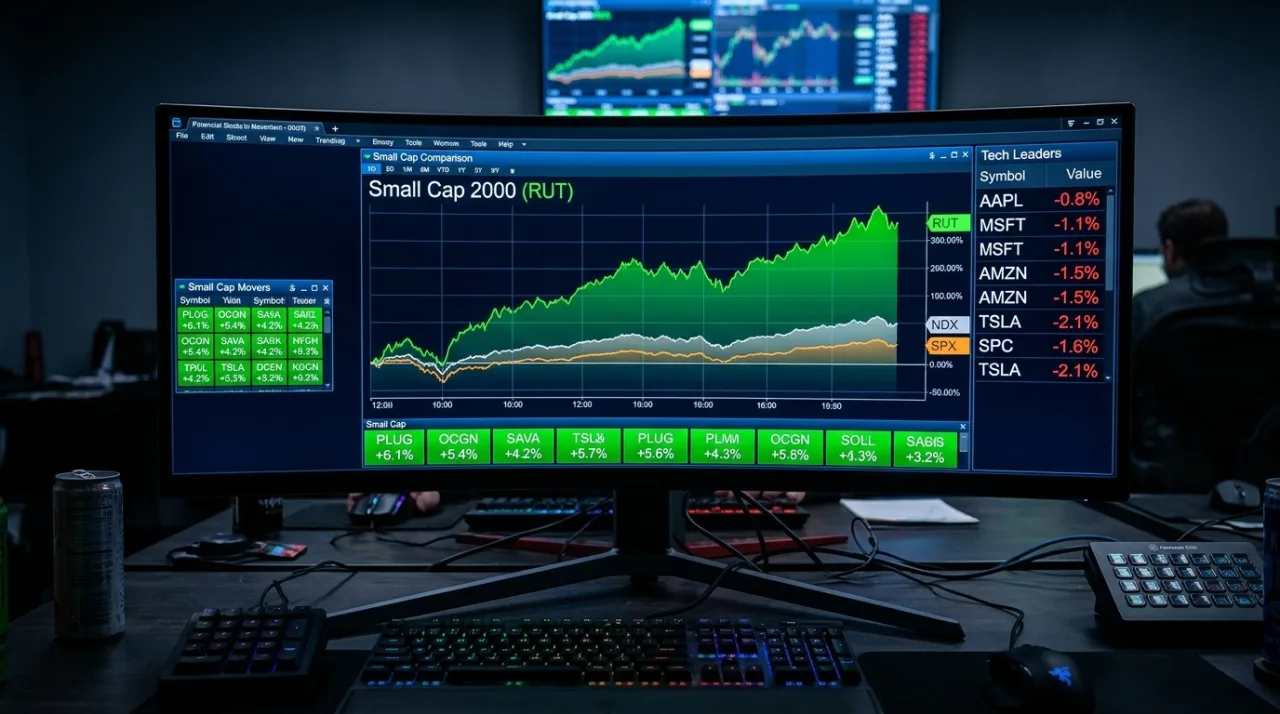
While trading screens reflect momentum, market analysts emphasize that a durable rotation requires fundamental strength rather than short-term bargain hunting. False starts have occurred repeatedly in recent years, primarily because smaller firms carry heavier debt burdens at higher interest rates than dominant headline index leaders.
[Tightened Credit Conditions] ───► [Floating-Rate Debt Pressures Small-Caps] ───► [Earnings Growth Needed for Sustainable Rotation]
Key Drivers of Small-Cap Market Rotation
| Economic Factor | Mega-Cap Enterprises | Small-Cap Companies |
| Debt Structure |
Locked in low fixed-rate debt during previous years. |
Rely heavily on floating-rate bank loans and commercial credit. |
| Monetary Policy Impact |
Shielded from short-term central bank rate increases. |
Directly exposed to rising central bank borrowing costs. |
| Rotation Requirement |
Sustainable valuation caps. |
Consistent earnings growth to service debt comfortably. |
Tracked reporting from sources such as the World Bank confirms that these developments align across independent financial lines of evidence.
The Broader Context for Borrowers and Savers
For everyday households and small business owners, market rotations impact real-world finances through credit access and pricing rather than stock ticker movements.
-
Direct Decision Points: Shifts in financial conditions materialize as interest rates on offer letters, fee updates on bank statements, or adjustments to financial products. Consumer advocacy groups emphasize that transparency at these specific decision points provides far more value than daily stock commentary.
-
Economic Expansion Signals: When equity markets broaden beyond technology leaders, it reflects a healthier expansion where cyclical and value-oriented sectors participate. This shift boosts regional economic activity, corporate hiring trends, and general business confidence.
-
Real-World Factors: Individual financial health remains tied to wage growth, inflation control, and local credit availability.
Strategic Outlook & Practical Takeaways
The trajectory of small-cap market rotation hinges on upcoming central bank and fiscal policy choices. Because market participants are positioned for multiple scenarios, immediate reactions to single policy announcements remain measured.
Actionable Guidelines for Navigating Market Shifts
-
Focus on Verified Facts: Base personal financial decisions on underlying financial data rather than speculative headline claims.
-
Maintain Flexibility: Prefer reversible financial steps while economic evidence and rate policies continue to evolve.
-
Evaluate Personal Context: Always weigh broad market guidance against your specific income, debt structure, and local economic conditions.
-
Watch for Accumulation: Look for sustained, multi-quarter improvements in earnings and credit stability rather than single-day market spikes.