
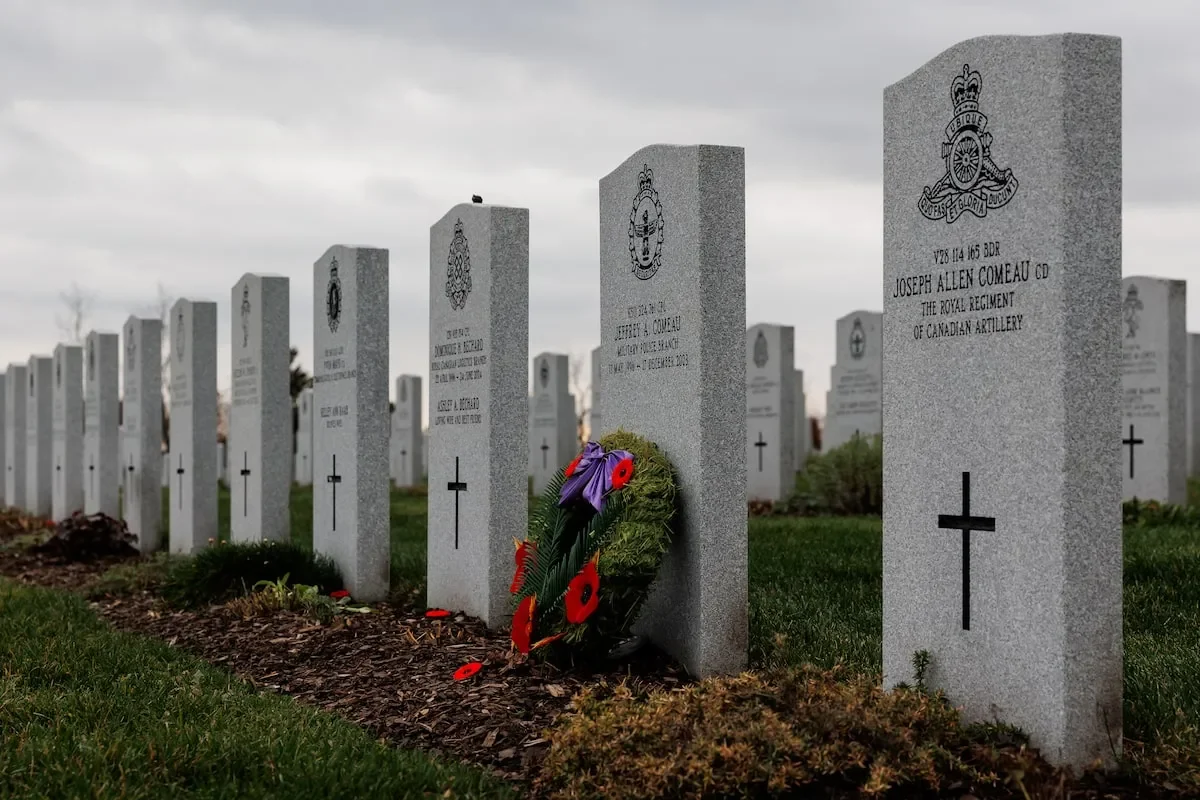
Canada honours its war dead every Remembrance Day, but the Department of National Defence’s own figures show today’s Canadian Armed Forces are falling further behind on readiness, which raises the question of whether remembrance alone is enough. The argument is simple: honouring past sacrifice should also mean properly preparing those who serve now.
Readiness Is Going the Wrong Way
A government publication from the Privy Council Office recently said a fighting war is a scenario Canada must plan for. A little over a week later, the department’s results report showed how far the military is from being ready for one. After decades of underfunding, much of the equipment is not up to the task, and many indicators are declining despite Russian aggression against NATO’s eastern flank since 2022.
The key numbers from fiscal 2025-26:
| Measure | Ready | Goal |
|---|---|---|
| Forces needed for concurrent operations | 61% | 90% (deadline moved to 2032) |
| Maritime key fleets | 53.91% | 60% (by 2032) |
| Land key fleets (tanks and armoured vehicles) | 48% | 70% (by 2032) |
| Aerospace key fleets | 41.9% | at least 70% (by 2032) |
Five years ago, readiness for concurrent operations stood at 71.7 per cent. It has now fallen three years in a row. Fewer than half of Canada’s already small armoured forces are fit to fight. Every target in the table has now been pushed back to 2032, which means years more of the same gaps unless the pace changes. Readiness figures are not abstract: they decide whether crews can train properly, whether ships can sail when called and whether aircraft are available for NATO missions.
Procurement Still Moves Slowly
It took a year to finalise the contract for urgently needed modern air defences for the Canadian-led brigade in Latvia, which would be on the front line in any conflict with Russia. Planned drone numbers are tiny compared with those of Ukraine or Russia. Recent budget projections also showed no progress toward NATO’s defence spending target between fiscal 2028 and 2031.
How Canada Got Here
Critics argue that a decade of treating military issues as unfashionable under the Trudeau government left a large bill. The current Liberal government has raised defence spending and launched a range of initiatives, but the department’s own data suggests rearmament is not moving fast enough.
What Real Commitment Would Look Like
Every November, politicians speak about sacrifice, honour and country. The stronger tribute would be urgent action: faster procurement, equipment that works, and training that gives service members the best chance of coming home alive and uninjured if they are sent to fight.
Canadians who want to follow the issue can read the department’s annual results reports, which set readiness numbers out plainly, and ask their MPs what is being done to meet the 2032 targets.